
Stanford Dermatologist: “Every Hair You’ve Lost To Menopause Is Still In Your Head — Waiting.”
After watching hundreds of menopausal women leave their doctors’ offices with the same three words — “that’s just aging” — and come back two years later with significantly more hair loss, a Stanford-trained dermatologist explains what almost every doctor in America has been getting wrong about menopause and hair loss for decades.

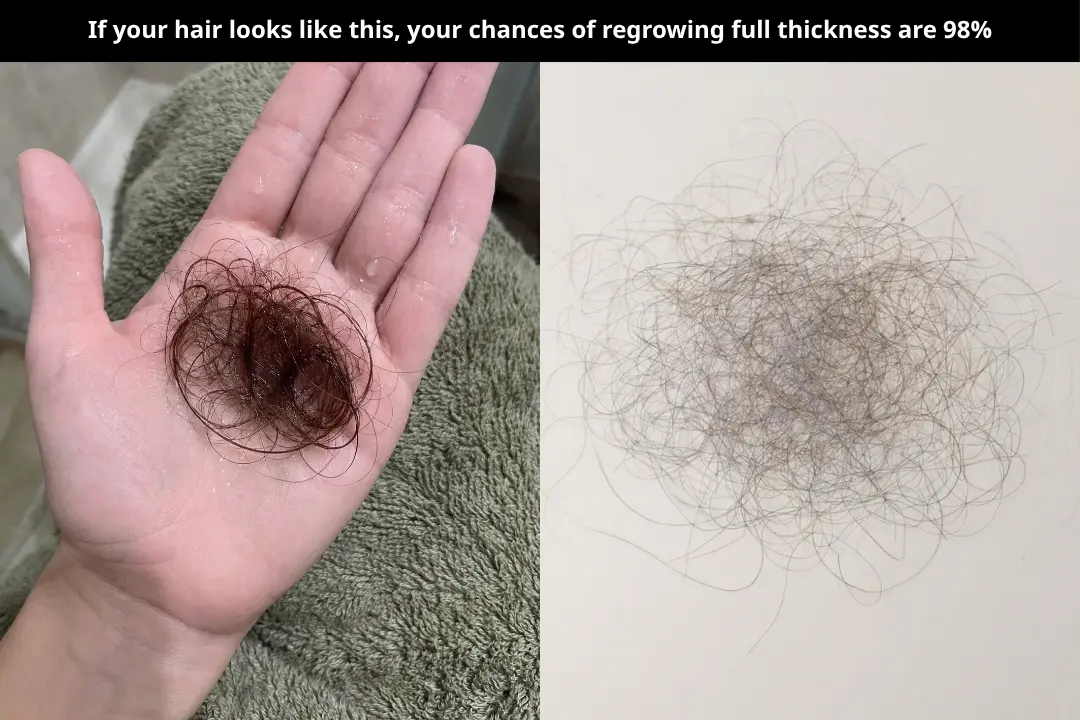
For the past decade I’ve been watching the same pattern play out in my clinic — and in the last three years, with a clarity I can’t ignore anymore.
A woman sits across from me. She’s somewhere between her late forties and early sixties. She’s been watching her hair thin for two, sometimes three, sometimes five years. She’s been to her OB-GYN. She’s been to another dermatologist. She’s tried the supplements everyone recommends. She’s spent real money on products that promised real results.
And at some point along the way, someone in a white coat told her some version of the same four words.
That’s just what happens.
By the time she reaches my office, she’s half-convinced they were right. She’s not here with hope. She’s here because she hasn’t quite given up yet.
And then I tell her something. That’s usually when I get the same three sentences.
“I can’t believe that’s possible. Why did no one tell me this sooner? Why did I spend three years convinced there was nothing I could do?”
Because what I tell her is that the hair she’s been mourning — the hair in the drain, the hair on the pillow, the hair that used to fill out her ponytail — isn’t actually gone. Almost all of it is still sitting in her head right now. Alive. Intact. Waiting.
And then I tell her what her brush is going to look like six weeks from the night she starts a simple scalp ritual I’ve been having my clinic patients do before bed.
Almost empty.
Not “a little less.” Not “more manageable.” The way it looked before any of this started.
95% of women in the clinical trial reached near-cessation of visible shedding by week six.
Because almost everything you’ve been told about menopause and hair loss — by your doctor, by the supplement industry, by the hair loss products originally built for men — has been aimed at the wrong layer. And here’s what peer-reviewed dermatology has known for years while that advice stayed exactly the same.
What The Research Already Established — And What Nobody’s Telling You
In a landmark study published in the Journal of Investigative Dermatology — the field’s most rigorous peer-reviewed publication — researchers confirmed something that should have reshaped how every OB-GYN and dermatologist in the country talks to their menopausal patients.
Hair follicles have estrogen receptors on them.
Not just in the ovaries. Not just in the uterus. On the same cells that decide whether your hair grows actively or goes silent.
When estrogen levels decline during perimenopause and menopause, those receptors go quiet. At the same time, the follicle’s sensitivity to DHT — the hormone responsible for miniaturizing and silencing hair follicles — increases sharply. The result is a scalp aging process that compounds faster than almost any other tissue in the body.
Most women sitting in their doctor’s office have never been told any of this. Their OB-GYN mentions it in passing, if at all. Their dermatologist, if they even get referred to one, offers minoxidil — a treatment developed for men with a completely different pattern of hair loss — and calls it a day.
The study was published years ago. The conversation in most medical offices hasn’t changed.
And almost every woman going through this right now is doing one of two things that’s quietly running the clock down on the window where this can still be reversed.
The Two Things Every Woman Going Through Menopause Is Being Told To Do — That Are Both Wrong
Mistake 1
“Give it time. Your hormones are adjusting. It may settle on its own.”
The most common response a woman in perimenopause or menopause gets when she brings up hair thinning. From her OB-GYN. Sometimes from her dermatologist. Almost always from well-meaning people around her.
It’s also the advice that costs her the most.
Because while she waits — hoping the shedding will slow, hoping the body will recalibrate on its own — the scalp aging process driving the thinning keeps compounding. It doesn’t pause because she’s patient. It doesn’t reverse because her estrogen has plateaued. It continues, month by month, pushing dormant follicles further past the point where they can still be woken back up.
There’s a clinical term for what happens to a follicle that’s been silent too long. Kenogen. A follicle that’s exited its resting phase but never received the signal to grow again — so it sits, intact, counted as lost, while the window for reactivation quietly closes around it.
“Waiting is the single most expensive thing a woman in menopause can do for her hair,” says Jennifer Hanway, a board-certified holistic nutritionist who has consulted for L’Oréal, Johnson & Johnson, and the British Royal Family. “The biology doesn’t wait with her. Every month she gives it time, she’s giving up follicles.”
She waits. The follicles don’t come back.
Mistake 2
“Try biotin. Take a collagen supplement. Get on Nutrafol.”
The second piece of advice — usually delivered at the same appointment, or found in the first ten Google results. Biotin gummies. Marine collagen. An oral supplement formulated by a dermatologist, sold in every Sephora in the country, reviewed by tens of thousands of women.
All of it aimed at the wrong layer.
Hair-growth supplements are built to nourish follicles that are already cycling — already active, already producing hair. They improve the quality of what the follicle is currently doing.
The follicles menopause silenced aren’t currently doing anything. They’re dormant, paused at a switch no oral supplement on the market has a published mechanism to flip. You can’t feed a follicle that isn’t firing. You can’t nourish your way to waking it up.
Jennifer has been telling her clients the same thing for years: “Oral supplements are doing their job — they’re just not built for this job. Menopause doesn’t deplete a vitamin. It changes the scalp environment those follicles are sitting in. Different mechanism. Entirely different fix.”
So women keep buying biotin. They keep losing hair. They keep being told the supplements need more time. And every month they wait, the window I’m about to tell you about closes a little more.
Take A Closer Look At Your Brush
Next time you clean your brush, pick up a strand. Roll it between your fingers. Hold it up to the light.
The cuticle is intact. The strand is smooth, pigmented, strong. Under a trichoscope — the 40x imaging device dermatologists use to read scalp tissue — it still had years of active life in it.
The hair is fine.
The scalp isn’t.
Your scalp pushed it out before it was done growing. And on a scalp undergoing the hormonal shift menopause creates, that eviction process accelerates faster than almost any other tissue in the body. Using the same biomarkers dermatology uses to grade scalp age clinically, I’ve measured the scalps of women in their early fifties functioning a full decade older than the face above them.
It’s not random. It’s not vanity. It’s biology — and it’s happening in three layers at once.
Your hair follicles have estrogen receptors on them. Not just in your reproductive system. On the same cells that decide whether your hair grows actively or goes quiet. For decades, estrogen was sending those receptors a signal that kept your follicles in their active growth phase longer, produced thicker strands, and slowed the natural aging of the scalp tissue surrounding them.
When estrogen declines, that signal goes with it.
At the same time, your follicles become dramatically more sensitive to DHT — the hormone responsible for miniaturizing and silencing hair follicles. This is the same mechanism behind male pattern baldness. In men, DHT acts largely unchecked from the beginning. In women, estrogen spent decades keeping it in check. Menopause removes that check.
And the scalp itself — already the most exposed tissue on your body, facing decades of UV, heat styling, and environmental stress that no other skin deals with — is now aging faster than anything around it.
Three accelerants, stacked on the one layer the hair loss industry has spent forty years ignoring.
Dermatology has two names for what happens next. Most women going through menopause have never heard either.
Phase 1 — Anagen Release
The follicle is pushed out early
Documented by Courtois et al. in a 15-year longitudinal study tracking nearly 10,000 individual hair cycles. The clinical term for a follicle forced out of its growth phase before it’s finished — exactly what happens when healthy follicles are surrounded by aging, estrogen-depleted tissue.
Phase 2 — Kenogen
The follicle never grows hair again
First measured by Guarrera and Rebora in their 2005 study published in Dermatology. The clinical term for a follicle that’s exited its rest phase but never received the signal to grow again. So it sits. Intact. Silent. Counted as lost — when it’s really just waiting.
This is why your hair keeps thinning no matter what you try. Every product on the market is built for the follicle. Nothing is built for the scalp underneath it — the tissue menopause is directly acting on. The hair loss industry has spent forty years aiming at the wrong layer.
But this is where my patients’ faces change.
The Study That Should Have Changed Everything
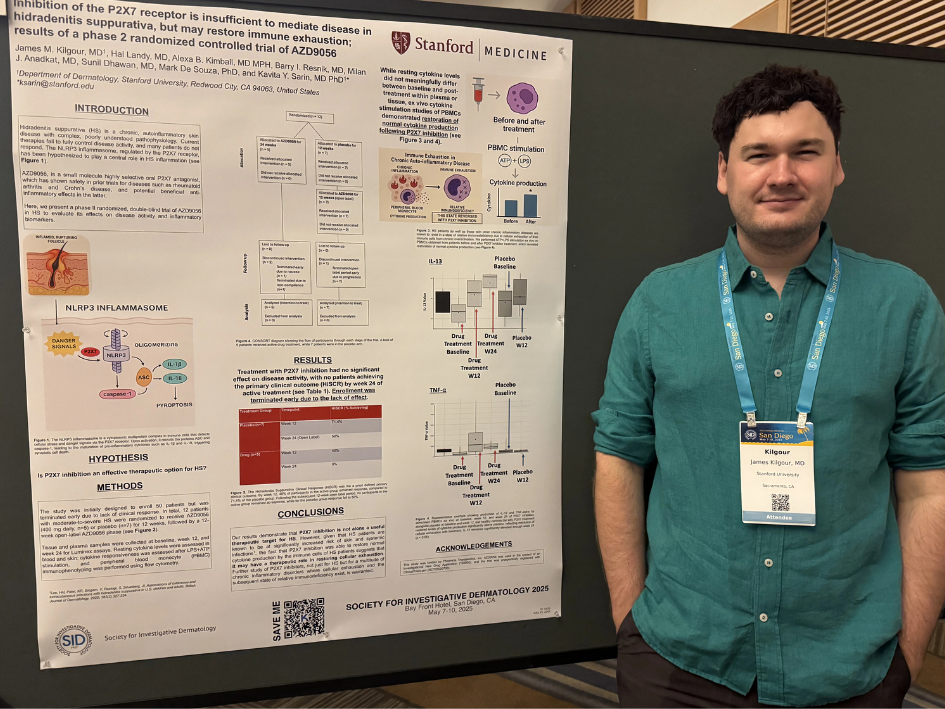
In 2021, researchers published a study in PNAS — one of the most rigorous peer-reviewed journals in the world — that quietly rewired how I think about every woman sitting across from me in a menopause consultation.
They ran two tests.
Test 1 — Thinning Hair To A Young Scalp
They took follicles from thinning scalps — the kind every dermatologist would have called dying — and transplanted them into healthy, young tissue.
Result: they grew back.
Test 2 — Healthy Hair To An Aged Scalp
They took cycling follicles — the kind you had in your thirties — and transplanted them into the aged scalp environment that hormonal decline had created.
Result: they died.
Same follicle. Alive or dead based entirely on the scalp around it.
Your hair isn’t failing you. Your scalp is.
The follicle that strand in your hand came from is still there.
Your scalp didn’t just push the hair out early. It stopped sending the signal that would bring the next one in. So the follicle sat empty. And it’s still sitting empty right now.
Every hair you’ve lost to menopause is still in your head. Just waiting.
Up to 1 in 4 of your follicles are sitting dormant right now. On an average scalp, that’s 25,000 individual hairs — six full hair transplants worth. Already yours. Already alive. Paused.
But here’s what the research makes clear.
Those dormant follicles don’t stay wakeable forever.
The longer one of them sits silent, the harder it gets to wake back up. After enough time in an aging scalp environment, some stop being wakeable at all. That’s what “permanent” means in female pattern hair loss. Every month you wait is a month more of those 25,000 follicles slipping past the point of return.
The dormant follicles on your head right now are still wakeable. The question is for how much longer.
Why I’m Writing This
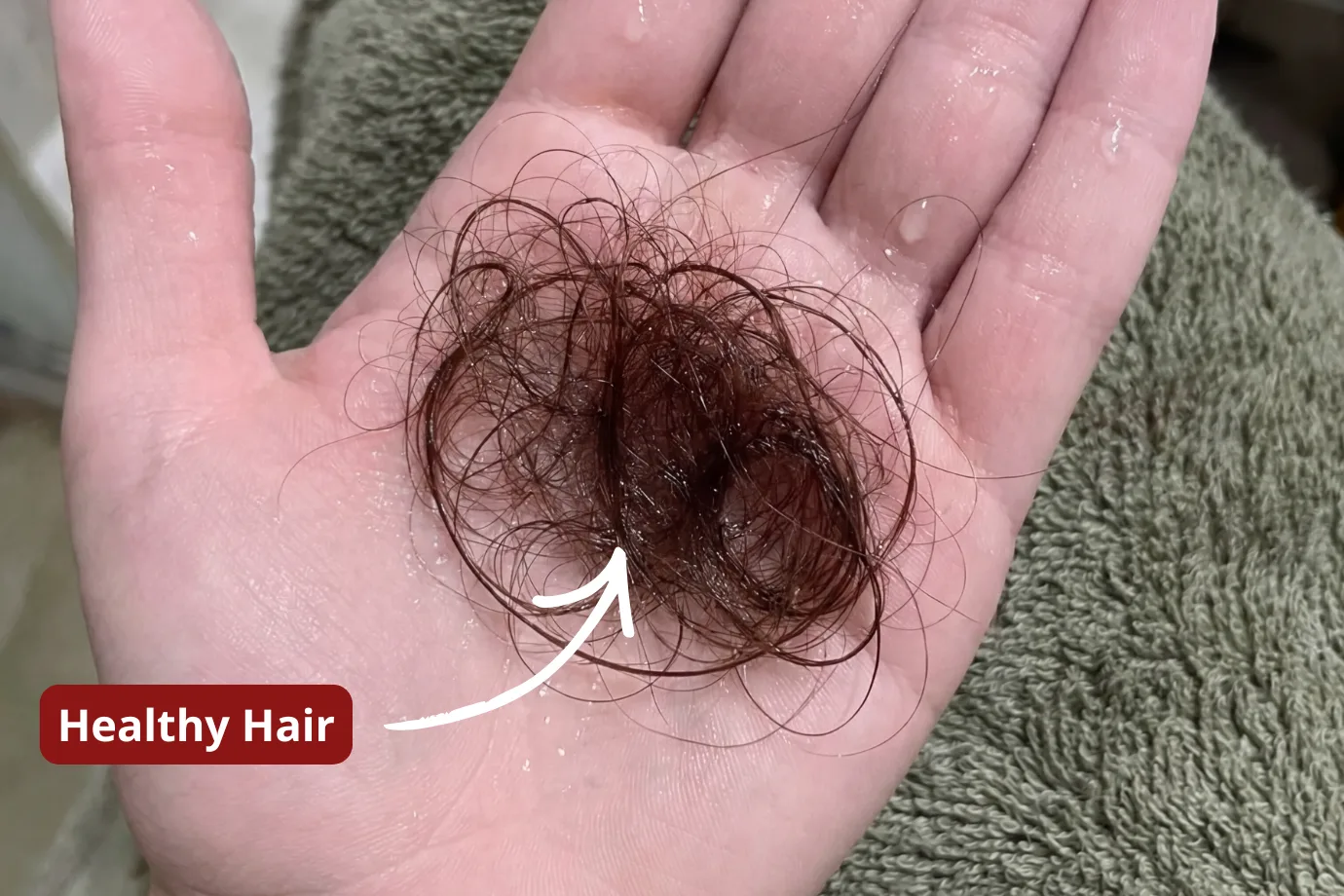
I need to tell you something before I show you what I built.
I didn’t create this protocol for a clinical trial. I didn’t create it for a market opportunity. I created it for one person.
My mum.
She started losing her hair in her early fifties. Not dramatically — not the way you’d notice from across the room. The way you’d only notice if you knew where to look. A part that kept getting wider. A ponytail that kept getting thinner. A woman who had spent her entire life barely thinking about her hair, suddenly reorganizing her whole morning around hiding what was happening to it.
She went to her doctor. She was told it was menopause. She was told there wasn’t much to do.
She tried the supplements. She tried switching shampoos. She tried the things women try when they’ve been told by medicine that their problem isn’t worth a real answer.
Nothing worked. And I was a dermatologist. I was supposed to know what to do.
Not because I hadn’t been trained — I had. Oxford. Stanford. A postdoctoral fellowship specifically in topical drug development. I had access to every tool dermatology had built. And when my own mother sat across from me with a thinning ponytail and the particular kind of quiet frustration that comes from being dismissed too many times, I couldn’t offer her anything the system hadn’t already failed her with.
That stayed with me.
A few years into my clinical practice, I started noticing a pattern I couldn’t ignore. For every man who walked into my office with hair loss, I was seeing four, sometimes five women. Women with the same complaint — diffuse thinning, widening parts, a ponytail that used to fill their hand and now didn’t. Women who had already been told “that’s just menopause.” Women who had already spent money on things that didn’t work.
Women who looked, in some way or another, like my mum.
I knew what I was being trained to offer them. Minoxidil — a drug developed in the 1980s for men with a receding hairline. Oral supplements that had never been tested on their specific mechanism. A “wait and see” that the biology never honored.
So I went back to the research. Not the clinical guidelines. The underlying science — forty years of peer-reviewed dermatology and cell biology that the hair loss industry had never assembled into a protocol because it wasn’t aimed at follicles. It was aimed at the scalp tissue underneath them. The layer nobody was treating.

What I found stopped me cold.
There were compounds that had been shown in published clinical testing to clear visible shedding in as little as six weeks in women over 40 — without touching hormones, without any of the side effects of the leading prescription.
There was a molecule that, in peer-reviewed research, grew new hair at 214% — more than doubling what researchers had ever measured from any topical treatment before it.
And there was a third compound measured independently as 81% more effective than the leading prescription hair loss treatment for the specific scalp-aging process menopause accelerates.
All of it published. All of it validated. None of it ever assembled into a single protocol aimed at the scalp itself. Hidden in plain sight, in journals the supplement industry had never read.
I spent the next two years building something that put it all together. Then I commissioned an independent clinical trial — not on a general population, not on men with receding hairlines, not on repurposed data from a drug designed for a completely different mechanism. On women between the ages of 38 and 65. Women who had already tried something else and watched it fail.
What Dermaclaim measured by week six is why I’m writing this article.
The KilgourMD Protocol
Two serums. 60 seconds before bed. Built specifically for the scalp biology behind menopause hair loss — and tested in an independent clinical trial on women between 38 and 65.
See the full protocol →“The Most Complete Shedding-To-Regrowth Response Ever Recorded In A Topical Protocol For Women Over 40.”
Each woman in the trial was experiencing hormonally-driven hair thinning — the widening part, the thinning ponytail, the shedding that hadn’t responded to anything else. Every one of them had already tried something before walking in. Supplements. Minoxidil. The products in every pharmacy. None of it had worked.
They were given the two-step protocol — Serum One to rebuild the aging scalp tissue, Serum Two to wake the dormant follicles — and told to use it for sixty seconds before bed. Nothing else changed.
Here’s what Dermaclaim measured.
By Week 6 — The Brush Goes Almost Empty
95% of participants reached near-cessation of visible shedding by week six. Independent methodology. Standardized wash counts. Every hair accounted for.
Not less shedding. Not more manageable shedding. The shedding stopped.
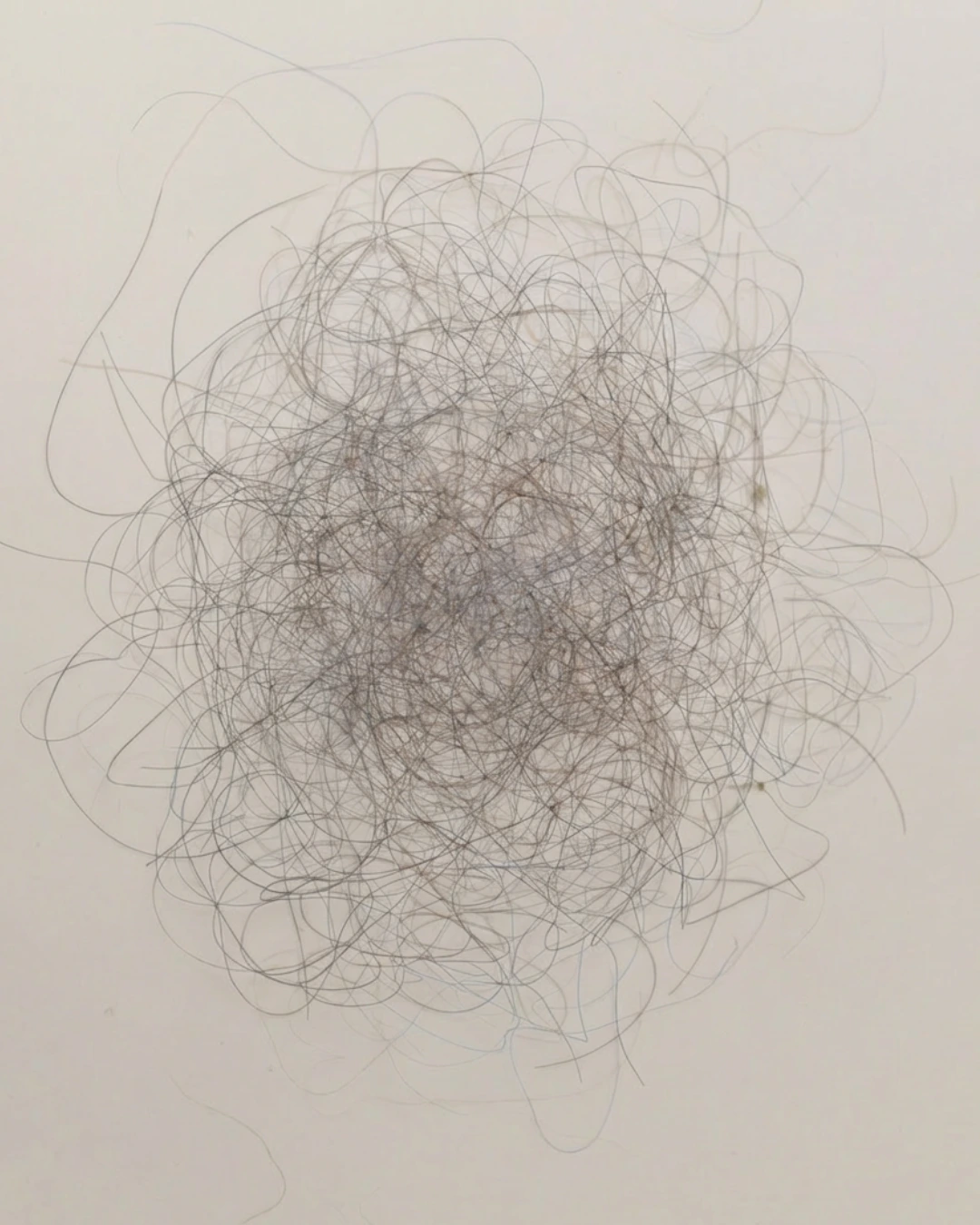
Week 0
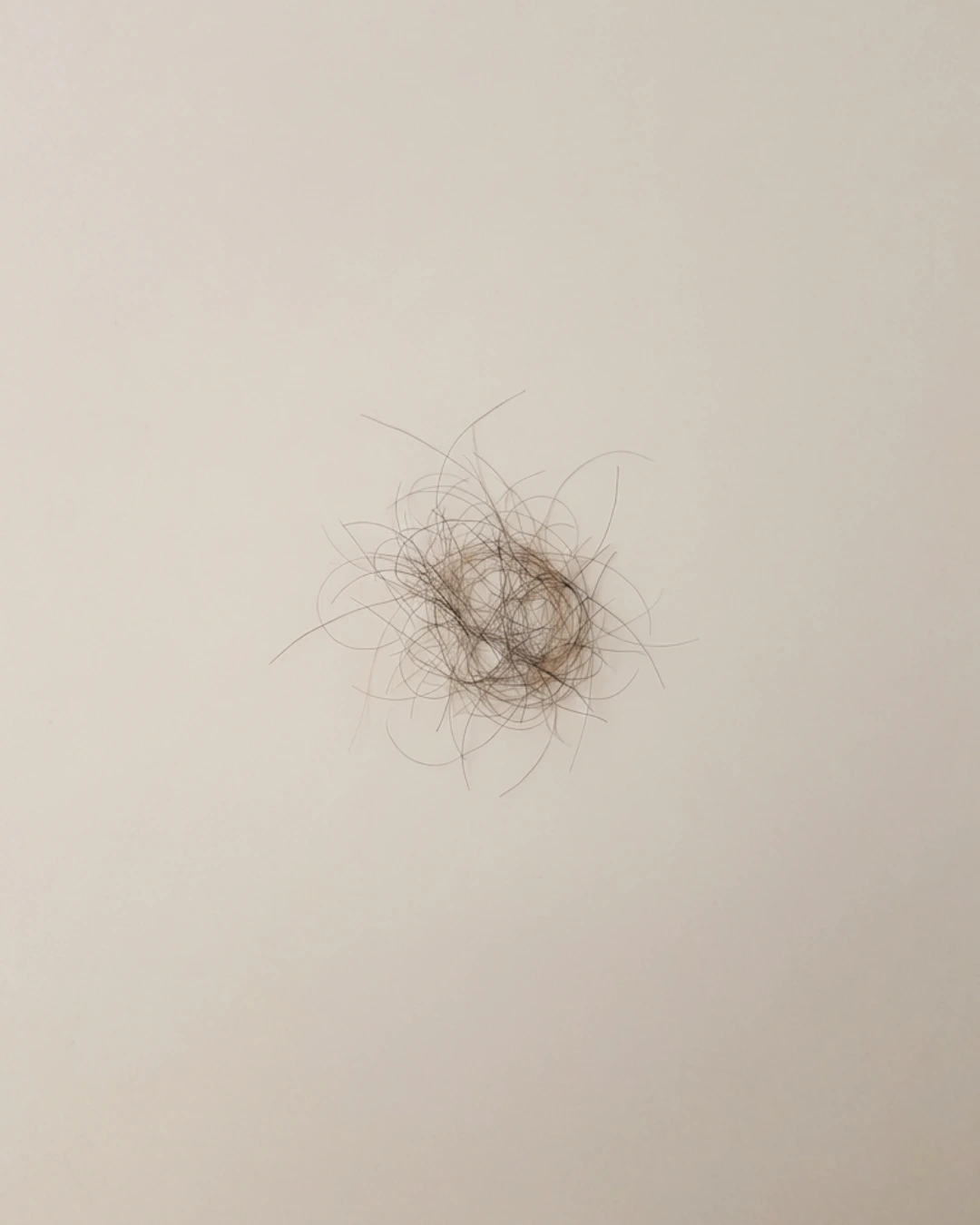
Week 6
Real participant hair collected each morning · standardized wash-count methodology
By Week 12 — 10,200 New Hairs
10,200 new hairs per participant. Measured by trichoscopy. Counted by hand. Verified frame-by-frame by Dermaclaim’s analysts.
Not “thicker-looking.” Not “fuller appearance.” Actual new strands growing out of follicles the hair loss industry had written off as gone.
On an average scalp, that’s roughly the density of six full hair transplants — achieved without a single graft, injection, or pill.
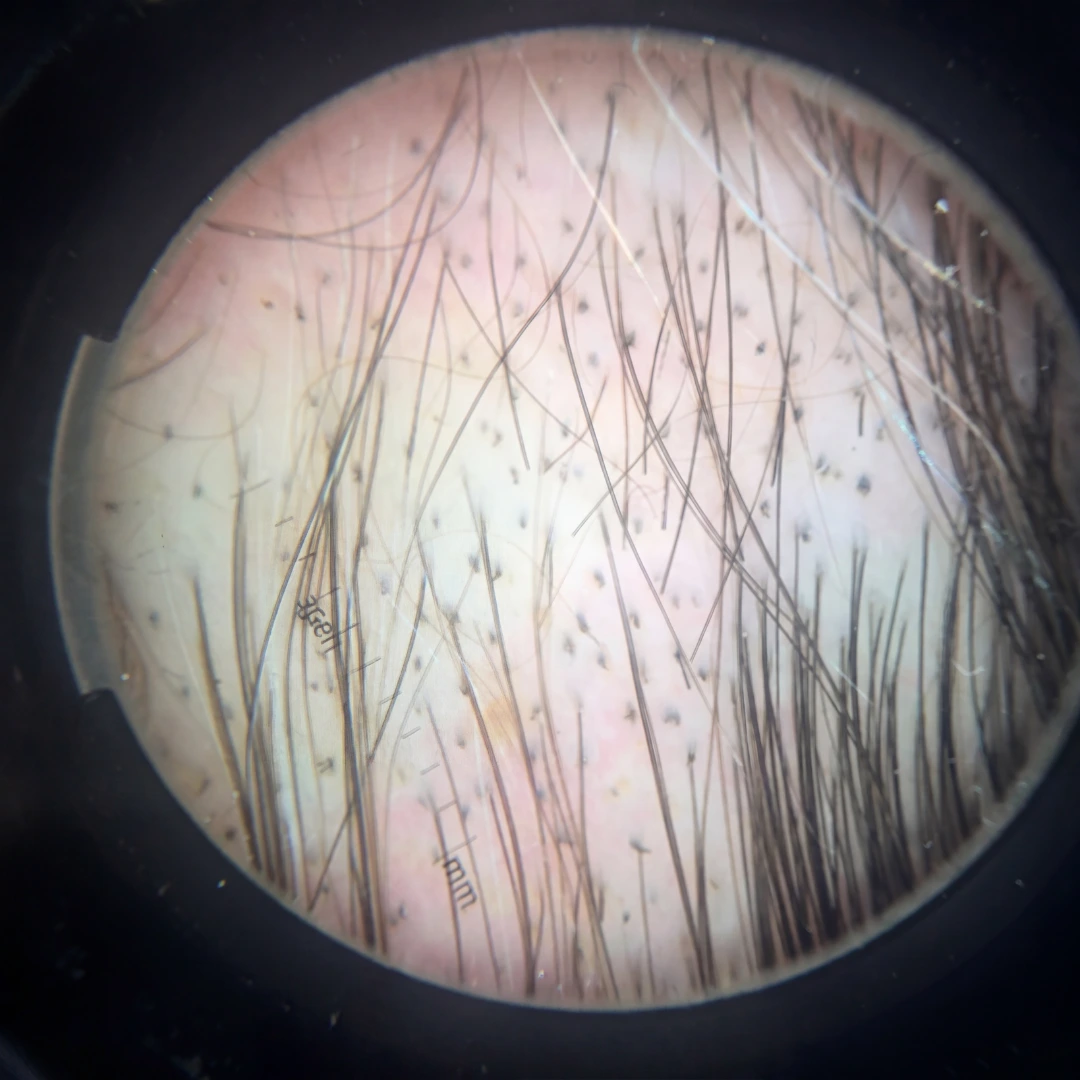
Week 0
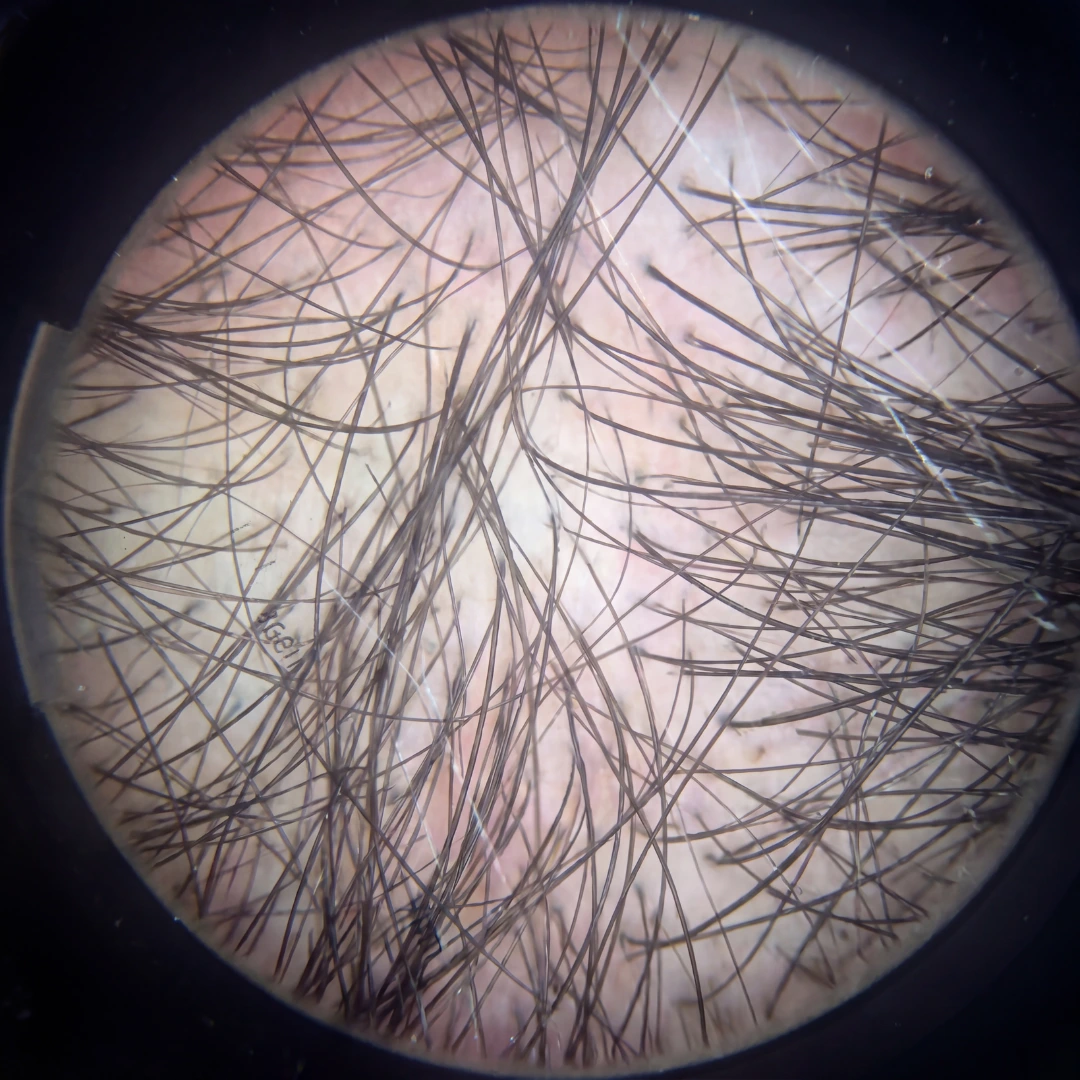
Week 12
+10,200 new strands
Trichoscopy count · 10,200 new strands rendered in frame
Hair Density Increased By 79%
Strands per square centimeter, measured before and after. The hair already there got thicker. The hair that came back came back full.
Independent reviewers described the resulting density as a profile most of these women hadn’t seen on their own heads since their late thirties.
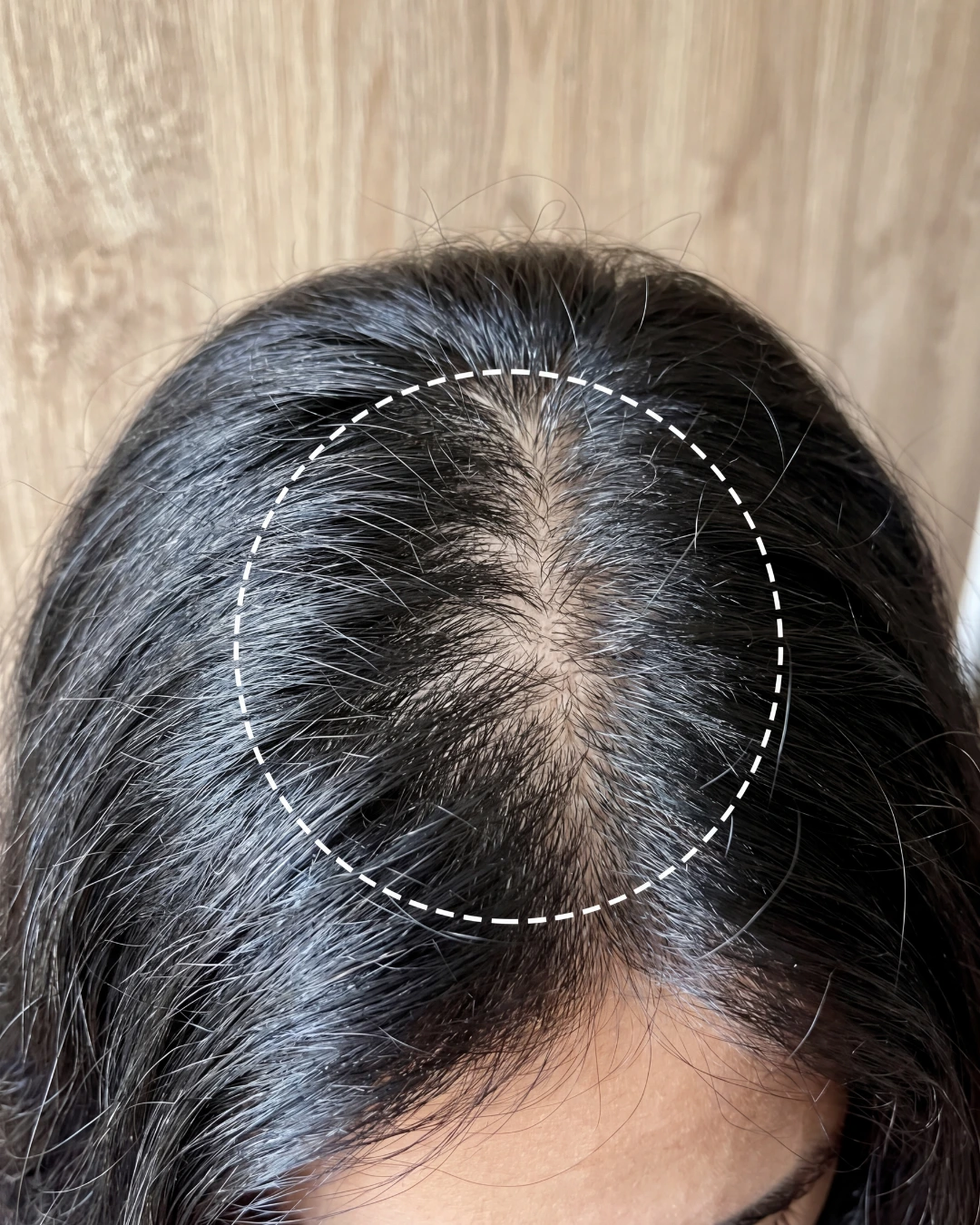
Before
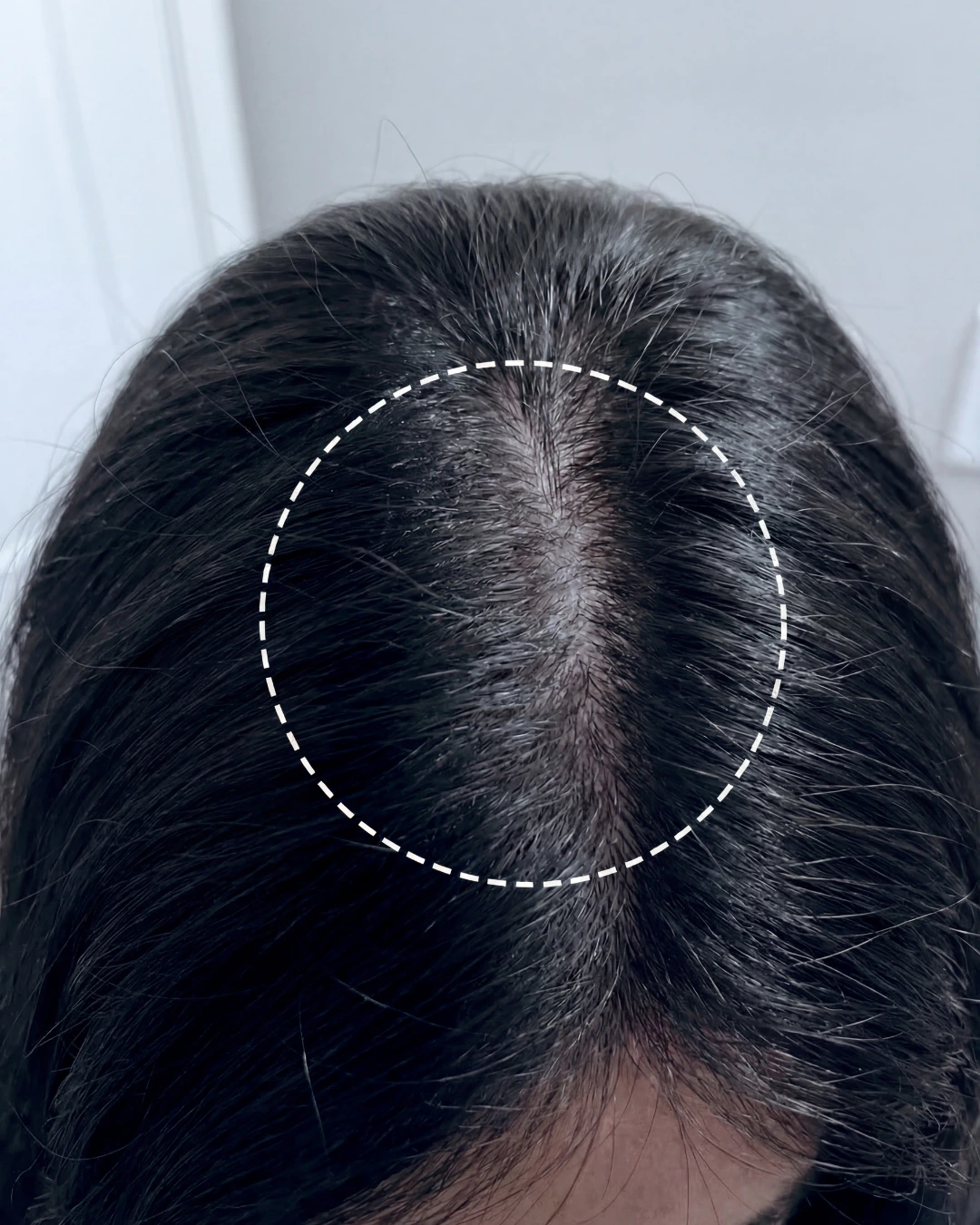
After
Crown density measured by trichoscopy at the same site, before and after 12 weeks.
| Measurement | Result |
|---|---|
| Shedding reduction at week 6 | 95% near-cessation |
| New hairs per participant at week 12 | 10,200 |
| Hair density increase | 79% |
| Overall response rate | 98% |
| Speed vs. leading prescription | 3× faster |
| Side effects | 0 |
| Dropouts | 0 |
3× faster than the leading prescription hair loss treatment. 0 side effects. 0 dropouts.
And one number Dermaclaim didn’t measure: every woman in the trial asked if she could keep using it after the trial ended.
How KilgourMD Works To Stop Menopause Hair Loss Within 6 Weeks
Every compound in both serums has one job: stop the eviction of healthy hair, or wake the follicles that have already gone silent.
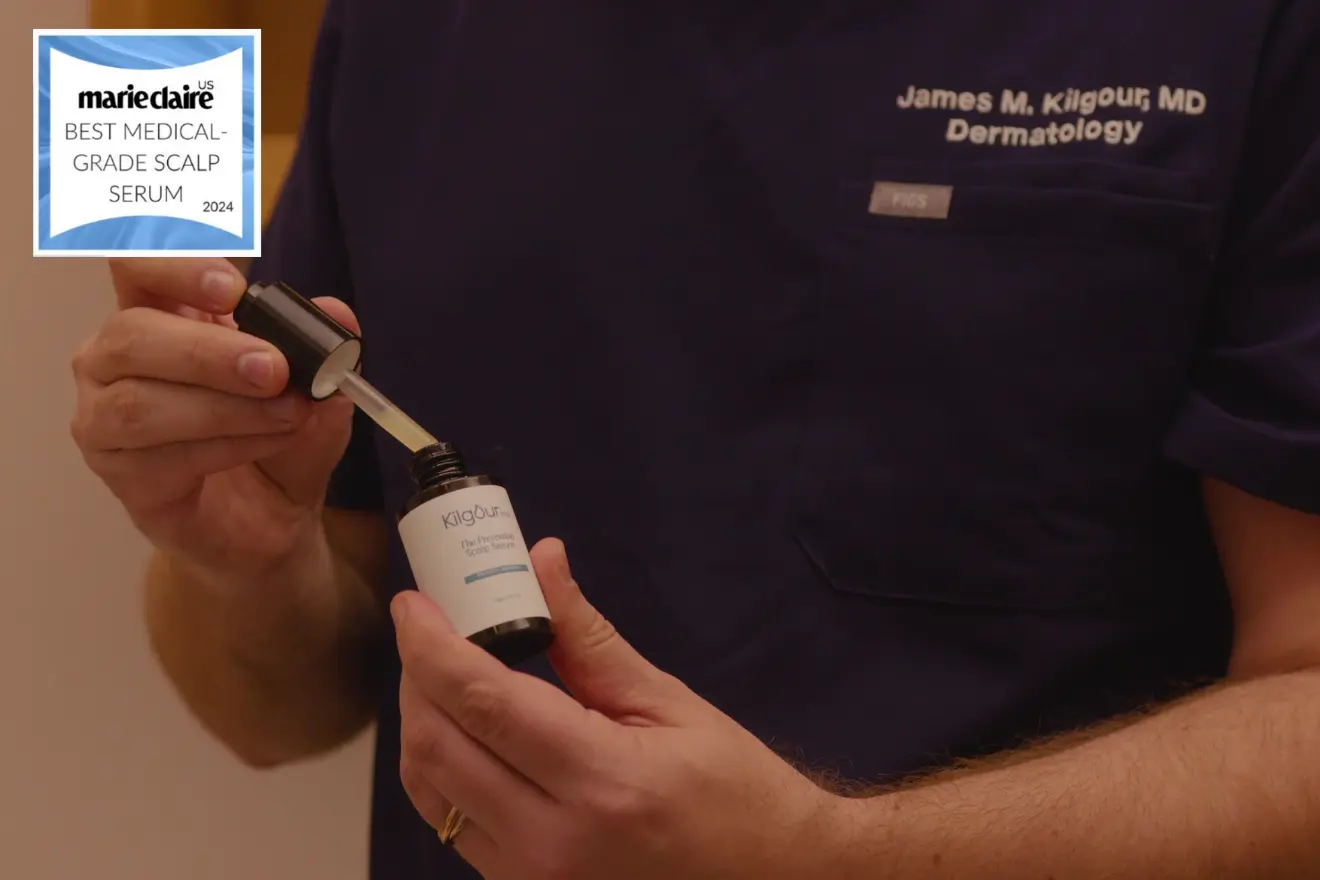
1. Stop The Eviction
The Prevention Serum — rebuilds the aging scalp tissue menopause has left unprotected

Capixyl
A peptide-and-red-clover complex that rebuilds the scalp tissue menopause has left increasingly unprotected. For decades, estrogen was maintaining the structural integrity of the tissue meant to anchor each strand through a full growth cycle. When estrogen declines, that tissue ages faster than anywhere else on the body. Capixyl rebuilds it. In head-to-head testing, it was measured at 81% more effective than minoxidil.
Translation: Fewer healthy strands in your brush, faster.
Procapil
A French compound with one job: penetrate the thickest skin on the body. The scalp’s density is precisely what makes topical treatments fail — most of what you apply washes off before it reaches the follicle. Procapil increases scalp blood flow by 121%, which is how every other compound in the serum actually gets where it needs to go instead of rinsing down the drain.
Translation: The rest of the protocol only works because this one does.
AnaGain + RootBioTec
Swiss pea sprout extract and watercress stem cell extract, working together on the hair already on your head — and on every strand the Treatment Serum wakes back up. Estrogen decline shortens the active growth phase of each hair cycle. These actives extend it back out by 78%.
Translation: Every hair on your head right now — and every hair that grows back — stays longer and grows longer.
2. Wake The Follicles
The Treatment Serum — reactivates the dormant follicles estrogen decline put to sleep

Redensyl — the hero
A patented molecule derived from larch tree bark. It doesn’t work through blood flow. It doesn’t work through hormones. It doesn’t work through nutrition. It’s the first topical compound with a published mechanism for talking directly to the stem cells inside the follicle bulge — the cells that decide whether a dormant follicle wakes back up or keeps waiting.
In clinical testing, Redensyl grew new hair at 214% over 84 days. More than double what any topical had ever produced.
For scale: a $15,000 hair transplant moves roughly 4,000 grafts. Redensyl produces 10,200 new hairs in 12 weeks. More new hair than surgery. No scalpel. No downtime. No recovery.

Rootivate-8 — the fuel
Once a dormant follicle wakes up, it needs three things immediately. Energy to divide cells. Protection from the DHT that menopause left unguarded against. And keratin to build the actual strand.
- Caffeine — energy for each newly-firing follicle to divide
- Saw Palmetto — blocks DHT from shutting the follicle back down the moment it wakes up
- Pumpkin Seed — supplies the keratin the new strand is physically made of
Backed by Rosemary, Ginseng, Turmeric, Pine Bark, and Amla — five botanicals chosen for specific roles in sustaining what Redensyl starts.
Redensyl pulls the trigger. Rootivate-8 feeds what comes out.Linda R., 54 · Denver, CO
Four years of thinning. Told it was menopause. Tried everything the system offered.
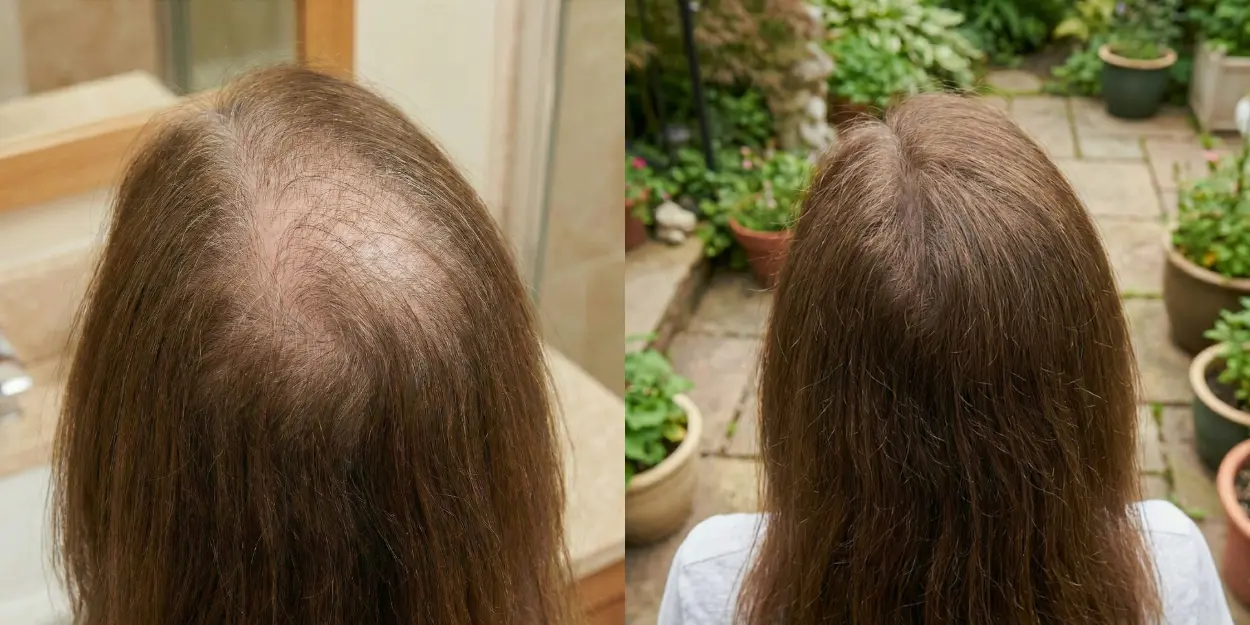
Linda’s hair started thinning the year she turned fifty. Her OB-GYN told her it was menopause and there wasn’t much to do about it. Her dermatologist agreed, added minoxidil to the conversation, and explained she’d need to use it indefinitely or the hair would come back out.
She tried Nutrafol for eight months. She tried biotin before that. She tried minoxidil for six weeks and stopped — the initial shed was worse than what she’d started with, and the idea of being dependent on it for the rest of her life felt like trading one problem for another.
By the time she found us she’d quietly stopped trying. Not dramatically — just a slow, private surrender. She’d reorganized her part. She’d stopped wearing her hair up. She’d filed it under “this is just what getting older looks like now.”
“I wasn’t even sure why I ordered it, honestly. I think because the 90 days meant I had nothing to lose. By week five I noticed the brush looked different. I didn’t say anything to anyone for another few weeks because I didn’t want to jinx it. My hairdresser said something before I did. I’ve worn my hair up three times this week. I hadn’t done that in two years.”
Carol M., 48 · Charlotte, NC
Perimenopausal. Found it early. Still felt like she was fighting alone.
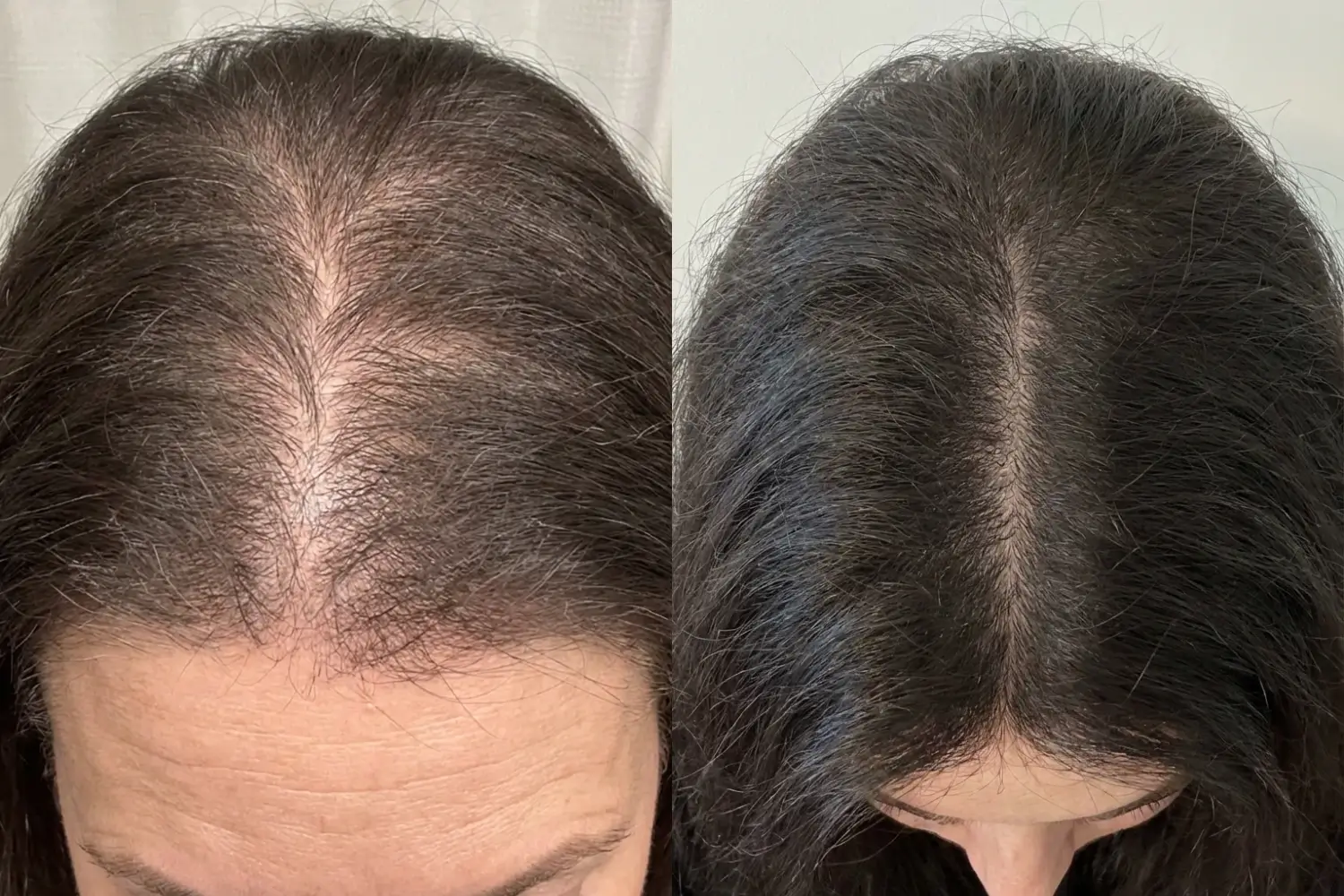
Carol noticed it at 45 — subtle at first, the kind of thing you convince yourself you’re imagining. A part that seemed slightly wider. More hair in the brush than felt normal. She brought it up with her gynecologist at her annual visit and was told her hormones were shifting, this was common, it would likely stabilize.
It didn’t stabilize. By 47 she was researching on her own, the way most women in this situation do — alone, at night, reading forum threads from women she’d never meet. She tried minoxidil for four months. Some regrowth. Enough to keep going. Then she read about what happens when you stop and decided she didn’t want to be on something forever that hadn’t been built for her in the first place.
“I spent three years feeling like I was the only one dealing with this, even though I know logically I wasn’t. Six weeks in the shedding calmed down significantly. By month three I had real regrowth along my part. I’m still in perimenopause — nothing about my hormones has changed — and my hair is growing back anyway. That’s the part I keep coming back to.”
Margaret T., 61 · Portland, OR
Post-menopausal. Had accepted it. Her daughter found the article.
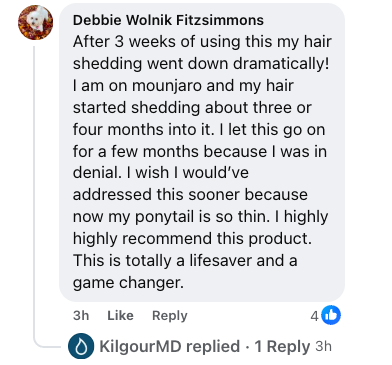
Margaret had made her peace with it. That’s how she described it when she first wrote to us — she’d made her peace. She was sixty-one. Her hair had been thinning since her mid-fifties. She’d tried a few things, they hadn’t worked, and at some point the exhaustion of hoping and being disappointed had quietly outweighed the hope itself.
She didn’t find us. Her daughter did. Sent her the article with a message that said: just read it, Mum.
She started the protocol mostly to have something to report back. She didn’t tell her husband. She didn’t tell her friends. She ordered it, it arrived in plain packaging, and she used it before bed the way you use something you’re not quite ready to believe in yet.
“I want to be honest — I didn’t expect anything. I thought I was too far along for any of this to matter. I’m writing this at week fourteen. My part is visibly narrower. I can see the new growth when I pull my hair back. I showed my husband last week and he said he’d noticed it himself a few weeks ago and hadn’t said anything because he didn’t want to get my hopes up either. I wish I’d found this five years ago.”
None of them came to us with confidence. Every one of them had already been through the version of this that doesn’t work. Every one of them had reached, in her own quiet way, the point where she was more tired of trying than she was afraid of giving up.
They gave it one more chance.
My Personal 90-Day “Empty Brush” Guarantee
Look, I get it.
You’ve been here before. The biotin that did nothing for four months. The Nutrafol you gave a full year. The minoxidil you tried and stopped because no one told you about the initial shed, and because the idea of using it every day for the rest of your life felt like a sentence, not a solution. The serums that smelled expensive and disappeared into your scalp without a trace.
And underneath all of it: a doctor who told you this was just aging, and some part of you that was never quite ready to believe it, but had started to anyway.
You’ve already paid for things that didn’t work. You’re tired of paying for the next one.
So here’s my promise.
Use both serums for 90 days. Every night. 60 seconds before bed.
By week 6, your brush should look almost empty. By week 12, your part should be narrowing. By day 90, you should be looking at a version of your hair you haven’t seen in years — not a younger version of yourself, just the one you remember as yours.
And if none of that happens — if you don’t catch yourself in the mirror one morning and feel, for the first time in a long time, like you’re looking at your own reflection again — I’ll refund every penny.
No forms. No hoops. No “store credit.” No asking you to send the bottles back or prove you used it correctly.
Just email the team and say “it didn’t work.”
We’ll refund your money. You keep the bottles.
Why am I willing to do this? Because three weeks ago, the Journal of Drugs in Dermatology accepted our trial for publication in their June 2026 issue. Peer-reviewed by independent dermatologists who had never met me and had no stake in the outcome. They checked the methodology. They replicated the math. They questioned the conclusions.
Then they published it.
And in those results — on women between 38 and 65 with exactly the kind of hormonally-driven thinning you’ve been living with — 98% of them responded. Every woman but one.
If 98 out of 100 women are going to see it work, a 90-day guarantee isn’t generous. It’s obvious.
To mark the publication, every woman who starts the 90-day protocol right now gets 50% off the full regimen. It runs while stock lasts.

Dr. James Kilgour, MD
Board-Certified Dermatologist, Stanford School of Medicine
What To Do Next
If you recognized yourself anywhere in this article — the brush you check before you’re ready to, the part you’ve rearranged without telling anyone why, the ponytail you stopped wearing, the private research at eleven o’clock at night when everyone else in the house is asleep — you already know what’s happening.
And you already know what happens if you don’t do anything about it. The research already told you. The follicles that have been sitting silent the longest are the hardest to wake. Some of this damage doesn’t reverse on its own.
But the dormant follicles on your head right now are still wakeable. Still alive. Still yours.
Start tonight, before bed. 60 seconds. Two steps. That’s it.
Six weeks from now, your brush is going to look different. 90 days from now, you’re going to catch yourself in the mirror — not fixing something, not hiding something. Just looking.
If it were me, I’d start with the 90-day supply. It’s the full protocol we ran the trial on, it’s where you see every stage of results, and with 50% off while it lasts, it’s where you save the most. But whatever option you choose, the guarantee covers every penny of your order.
Free Shipping · 90-Day Money-Back Guarantee
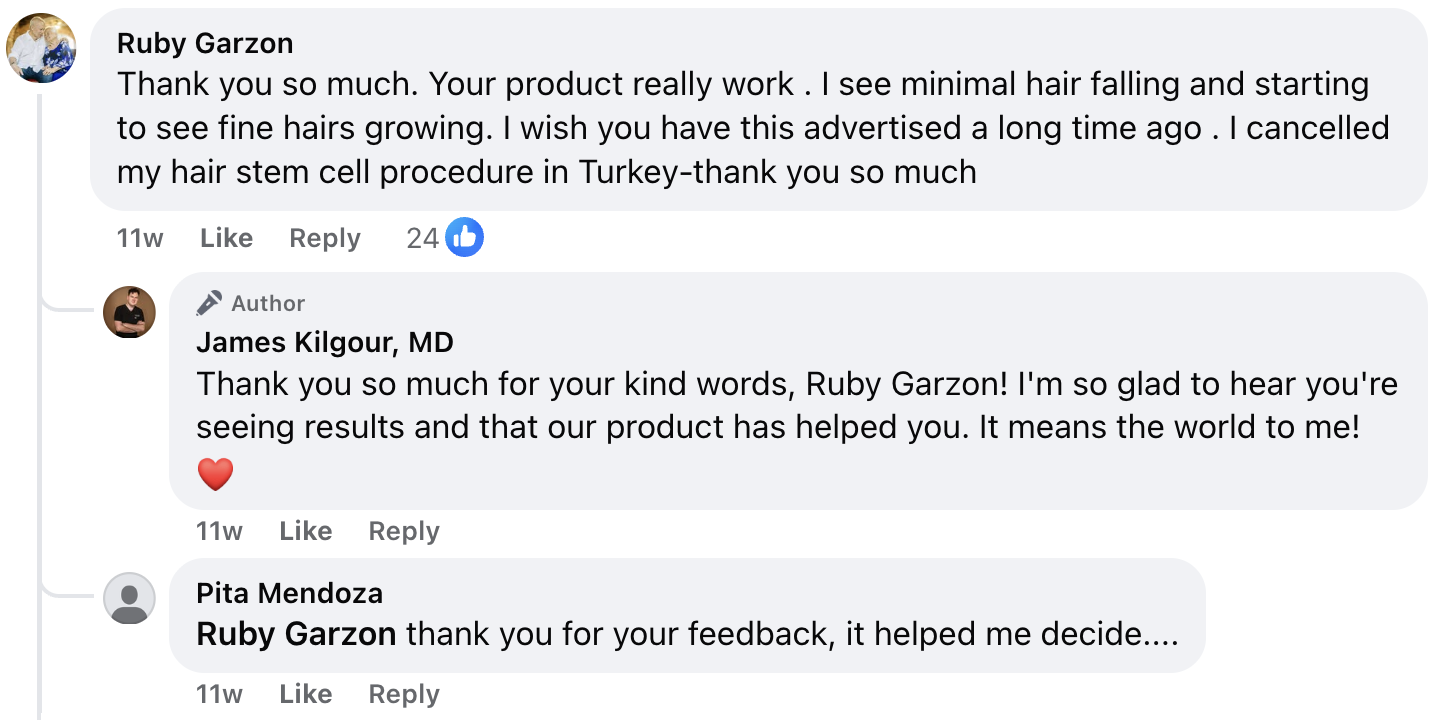
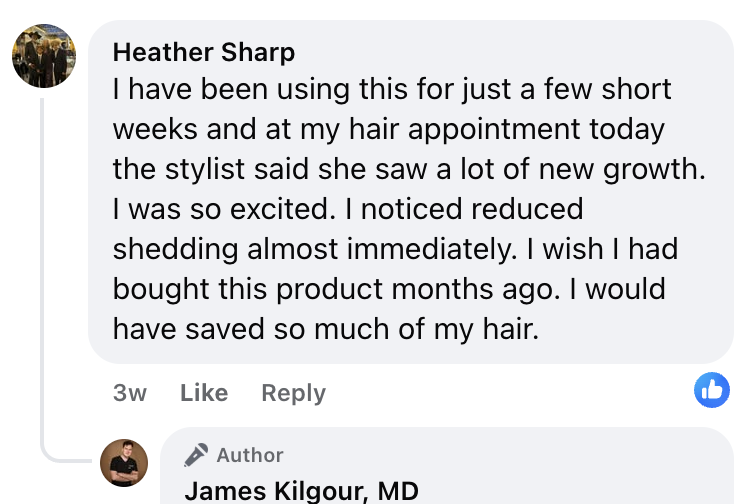
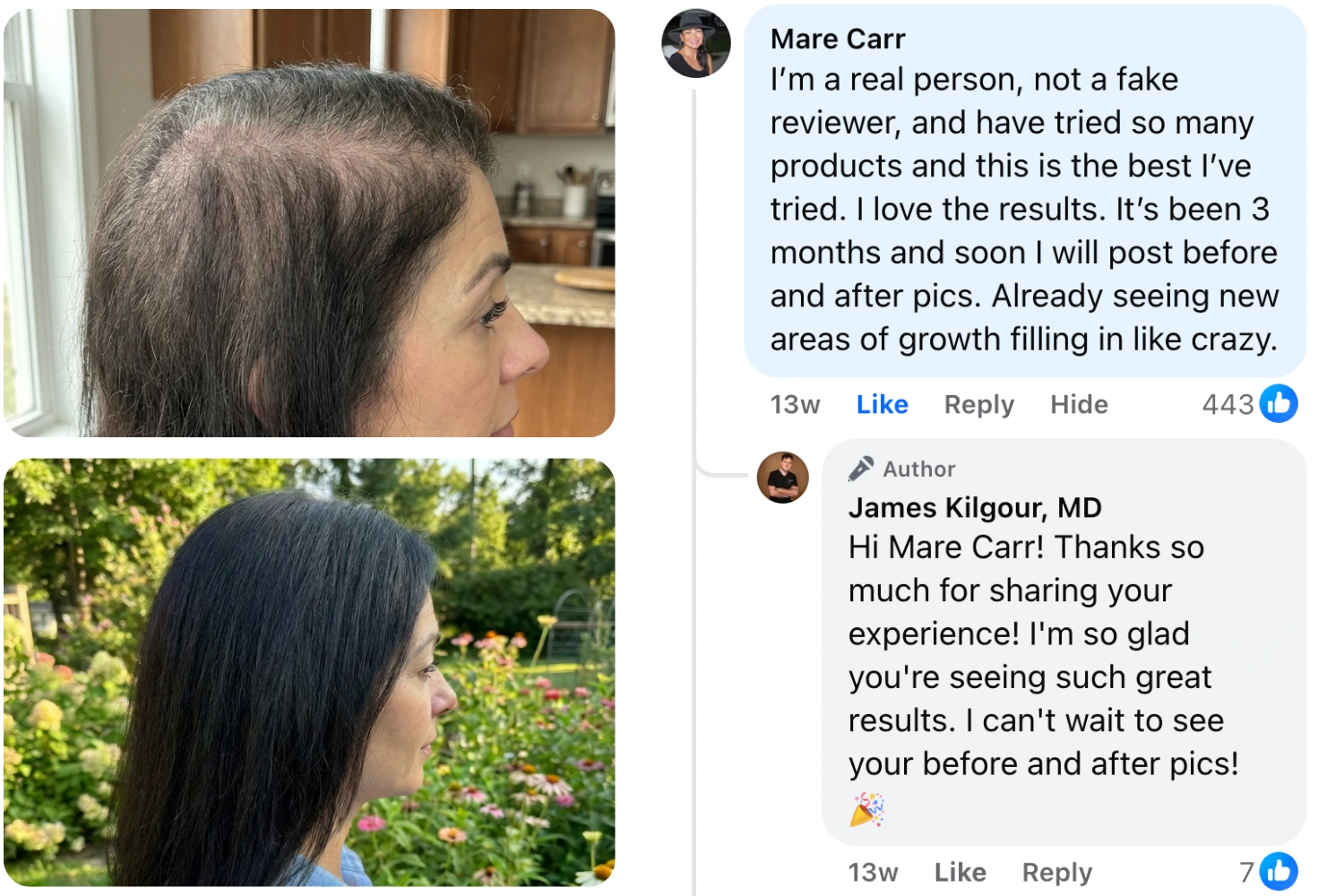
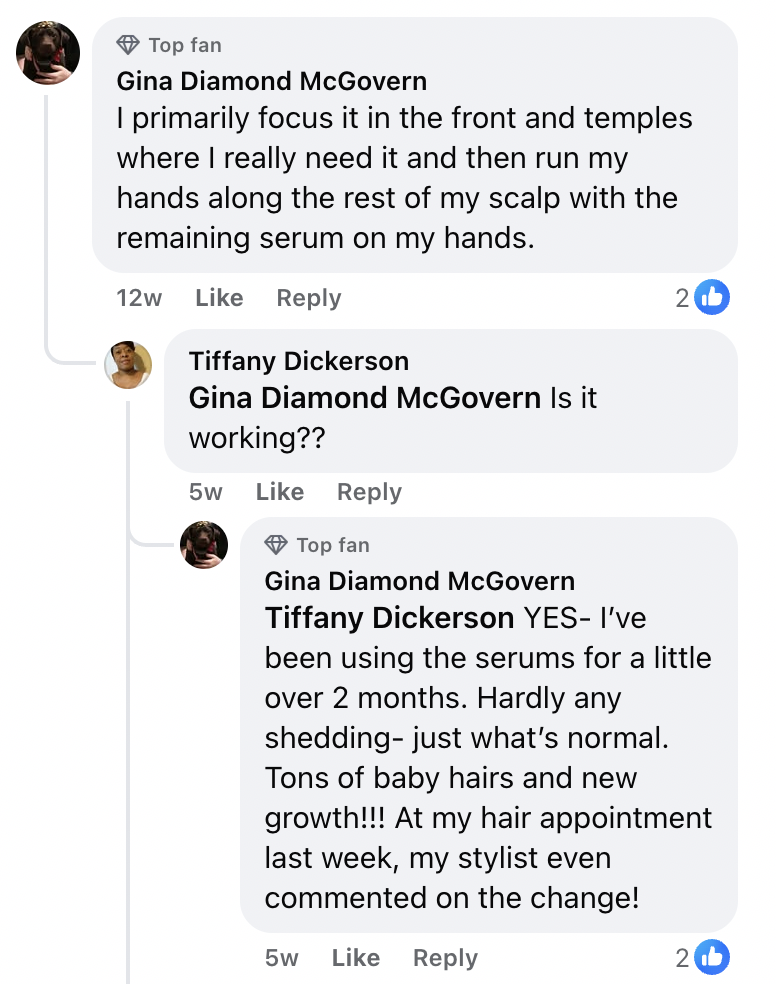
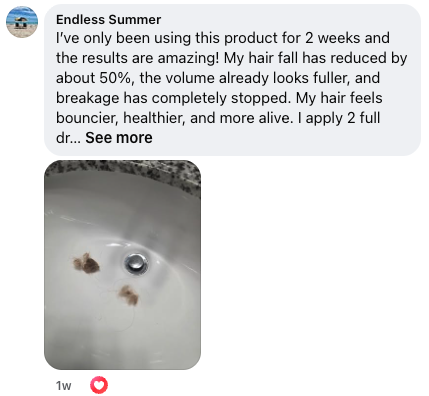
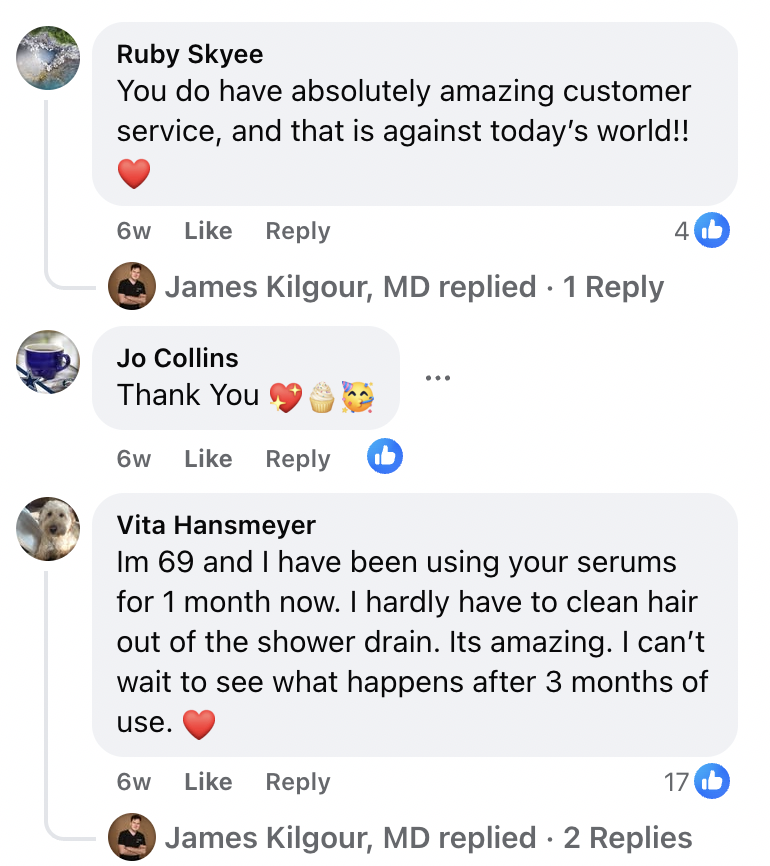
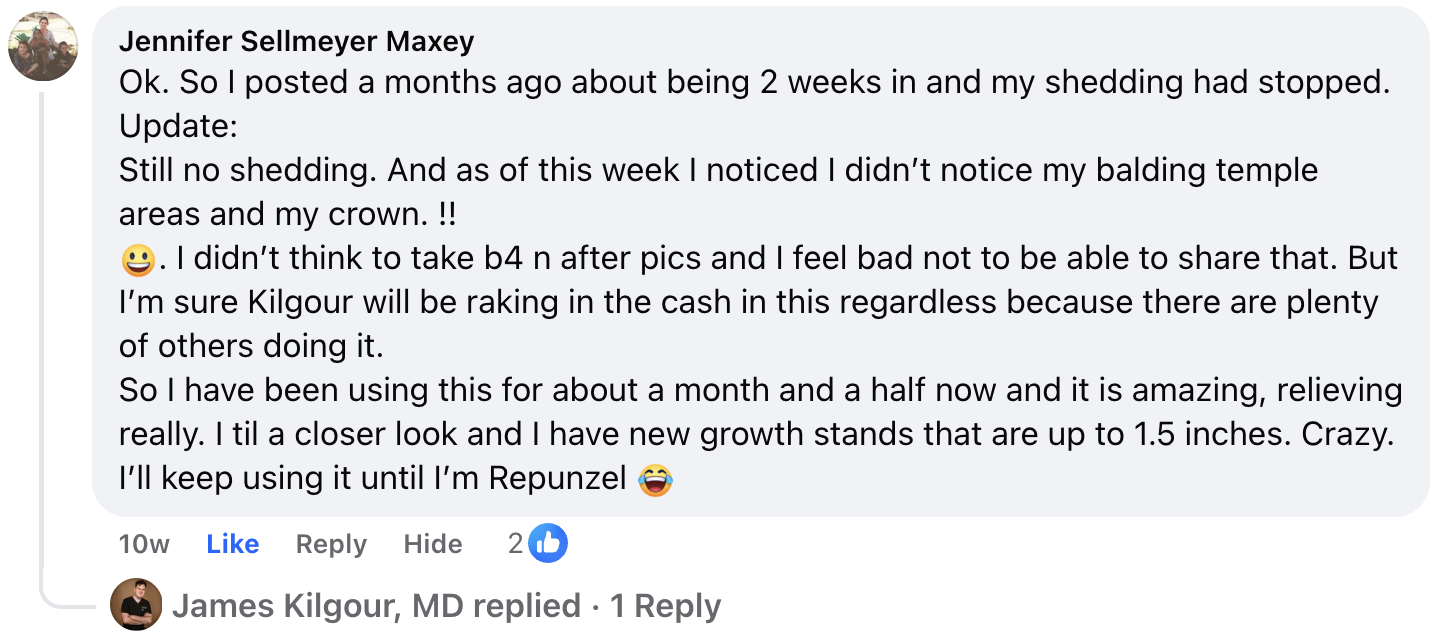
What Women Going Through Menopause Have Been Writing
Free Shipping · Refund If It Doesn’t Work

Meet Dr. James Kilgour
Board-Certified Dermatologist · Stanford-TrainedDr. Kilgour built this protocol because the hair loss industry spent forty years building tools for men — and the women sitting across from him in clinic deserved something built specifically for them.
He watched his own mother go through this. He watched her try the things medicine offered and come away without answers. And he watched, year after year in his own practice, as women with hormonally-driven hair thinning were handed a prescription designed for a different problem, or told to give it time, or sent home with biotin and a shrug.
He spent two years pulling together forty years of peer-reviewed research the hair loss industry had never assembled into a single protocol. Two serums. Seven patented compounds. Matched to the specific biology behind menopause hair loss. Then he ran a clinical trial on women between 38 and 65 specifically. The response rate came back the highest in the industry.
That’s why we’re here.
Start Today — Save 50%
50% Off the Full Protocol · Free Shipping · 90-Day Guarantee
GET 50% OFF →Free Shipping · 90-Day Money-Back Guarantee